
Infant Feeding
Sucking to feed is an infant’s first milestone, but that doesn’t mean it always comes easily! Support from your doctor or midwife and public health nurse is a great place to start, but there are many facets of supporting an infant’s feeding journey. At Kids Physio Group, we have several physiotherapists with additional training in the area of Infant Feeding, who are here to support you and your baby along the way.
Feeding is an infant’s very first motor milestone. When tightness or asymmetries are present, the infant may have a more challenging time. A physio with training in infant feeding will assess your infant’s latch, tongue mobility, and general motor development. If your child has already been diagnosed with ankyloglossia or a “tongue tie” and has been recommended to have a release, physiotherapy can be helpful before and after the procedure.
Underlying Causes of Feeding Issues
Physiotherapy can help address some of the underlying causes of feeding issues as well as associated conditions, including:
-
Poor oral mobility: Poor mobility and quality of movement of the tongue and jaw
-
Decreased general mobility: Decreased mobility of other areas of the body (i.e. the neck)
-
Infant Conditions: Torticollis and plagiocephaly
Our physios perform assessments and treat oral restrictions, tension, and tightness in the body that contribute to ineffective oral mobility. Feeding concerns are most likely to improve when addressed as early as possible.
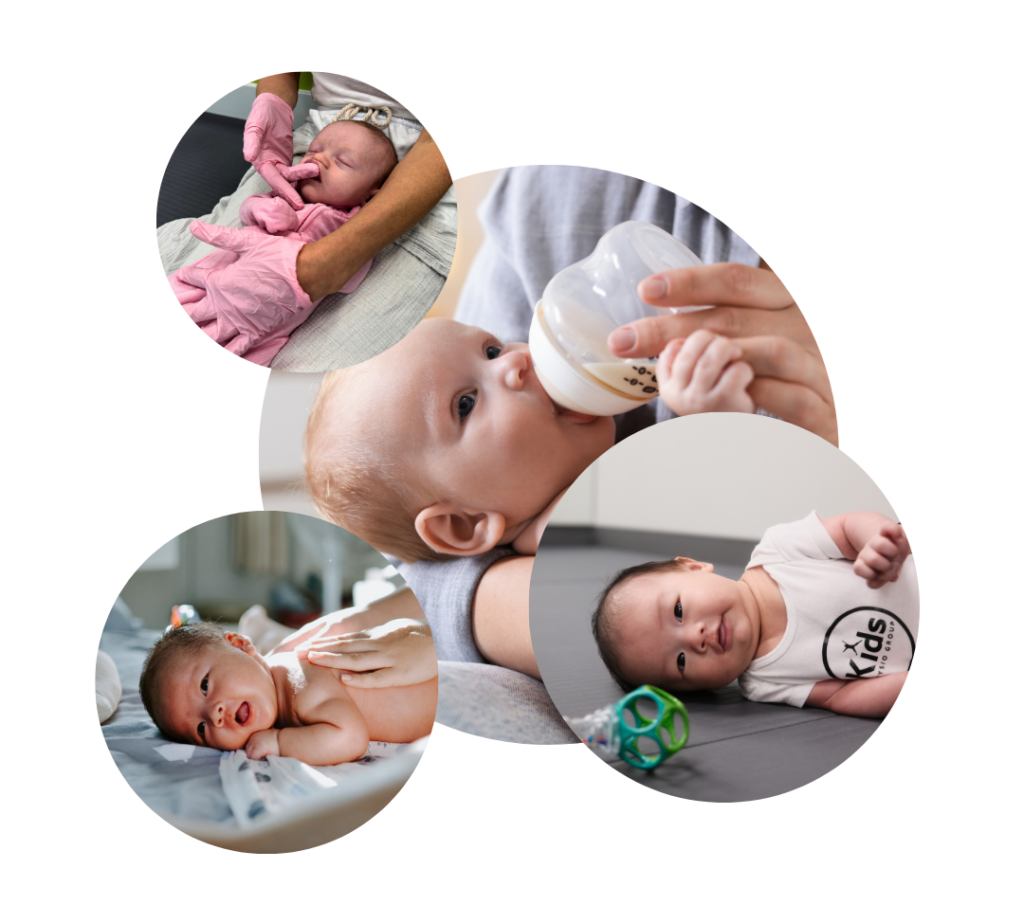

Infant Feeding Physiotherapy
Kids Physio Group offers evidence-based infant physiotherapy support for your baby's feeding issues. Depending on your child’s needs, infant feeding physiotherapy may include:
-
Full body and oral-specific exercises
-
Bottle and pacifier recommendations
-
Strategies for addressing infant engagement and aversions
-
Suck training to improve tongue strength and function
-
Manual techniques to help decrease tension in the mouth or body (i.e. stretches)
-
Positioning recommendations to optimize latch and breastfeeding
-
Collaboration with other healthcare professionals (such as a lactation consultant and/or pediatric dentist) to support your family’s needs
Infant feeding difficulties often stem from physical tension, alignment issues, or muscle coordination. These issues can present themselves in a variety of ways, including:
-
Trouble latching or maintaining latch
-
Fussy/prolonged crying
-
Clicking sounds/gasping/choking
-
Gagging/reflux
-
Blissters
-
Mouth breathing/high palate
-
Long feeds/falls asleep
-
Gumming/chomping
-
Not emptying breast
Have More Questions?
We believe in a policy of being truely transparent with our families. Don't hesitate to reach out!
Each of our locations have knowledgable staff who are ready to answer your questions.
Feel free to drop into a location today to chat with us!
Please use the locations tab in the menu bar to identify the closest Kids Physio to you.
We are conveniently located across Canada!
For all booking inquries please contact your local Kids Physio or use one of the Book Now buttons.
Other inquires:
info@kidsphysio.ca
FAQ
Find out the answers to some of the questions you may have before booking with our team.
When is the best time to get support for infant feeding concerns?
The best time to come to physiotherapy for infant feeding concerns is typically when the infant is 6 months old or younger. We don’t support infants starting solids or eating solids, but we can help with breastfeeding or bottle feeding to make the journey as comfortable as possible for parents.
What is acid reflux?
Acid reflux happens in babies when the contents of the stomach flow back up into the esophagus. This can lead to symptoms like pain, atypical movements, interrupted sleep, lots of spitting up, and sometimes failure to thrive. We see these babies move especially into extension (lots of back arching) and RIGHT neck rotation.
How can we help?
- Positioning – these kids do a LOT of extension, making activities difficult that require flexion (chin tuck, bringing hands and toys to mouth, rolling, crossing midline, sitting, crawling)
- Tummy time is crucial! Prone is best for preventing reflux, as the stomach contents stay further away from the lower esophageal sphincter
- Managing constipation and gas- if the contents aren’t emptying at the bottom, there is backflow! Teaching baby massage and positioning techniques to help
- Reducing work of breathing – again, via positioning (especially while feeding)
What is infant feeding bodywork?
Bodywork physical therapy refers to a range of gentle techniques pediatric physiotherapists use to help babies release tension, improve mobility, and promote better function. These techniques include soft tissue massage, gentle stretching, and manual therapy.
Our clinics are well-equipped to provide infant bodywork and infant feeding techniques that will promote relaxation and calmness for both mom and baby!
What is plagiocephaly?
Also known as “infant flat head syndrome”, plagiocephaly is the term generally used to describe positional head shape asymmetries. Clinically, head shape concerns are broken down into three categories:
- Plagiocephaly: asymmetrical flattening of the back of the head, often linked to torticollis or a preference for looking in one direction
- Brachycephaly: symmetrical flattening of the back of the head associated with the infant spending a lot of time on their back
- Scaphocephaly: a long, thin head shape commonly seen in premature infants who spend significant time in the NICU
What is torticollis?
Torticollis is a term used to describe neck tightness. This tightness comes from shortening of the neck sternocleidomastoid muscles on one side – a large muscle on the front of the neck which tilts the head to one side and, typically, rotates the head to the opposite direction.
There are multiple reasons that torticollis can occur. Most commonly, it is caused by:
- Positioning in utero – whereby your baby may have been nestled in the womb for a period of time
- Through the process of vaginal delivery – whereby their neck may have been strained during the birthing process
- Sleeping position – whereby your baby sleeps with their head turned to one side
- Handling preference – whereby you may prefer to feed or carry your baby in one hand/arm
How do I find a paediatric physiotherapist near me?
If your child is experiencing any conditions that you would like assessed, you can find physiotherapists who offer Infant Feeding Services near you by visiting our location page.
From there, you will be able to book an appointment for your child at the closest physiotherapy clinic near you.
BOOK YOUR INITIAL ASSESSMENT TODAY
Take the next step and make your child’s health a priority!